


Rebecca Kirby
Research Assistant Professor and Lecturer in Kellogg’s Sustainability and Social Impact Program
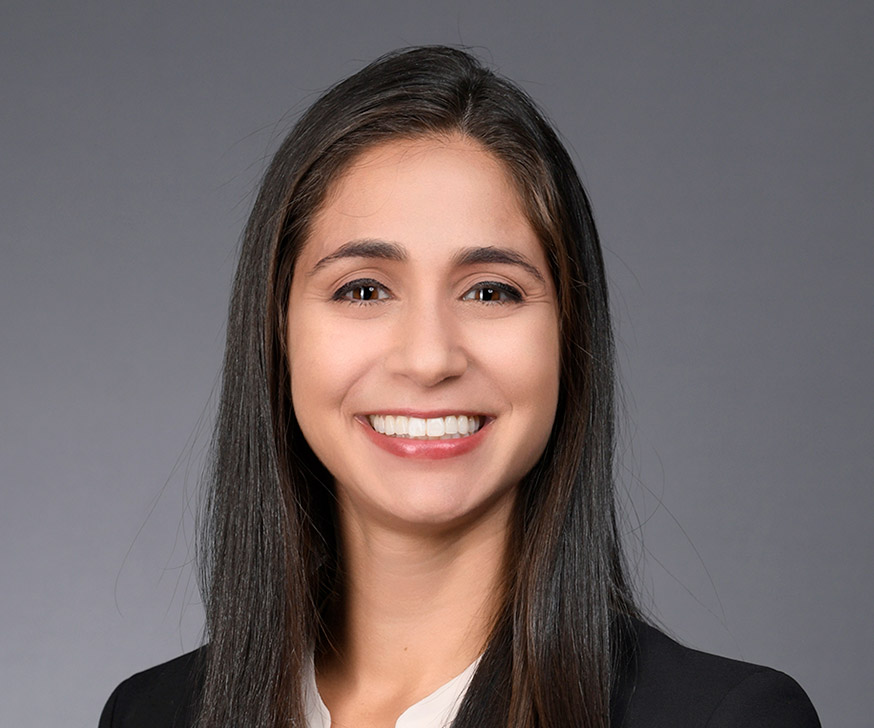
Rebecca (Becca) Kirby
Becca Kirby serves as a Research Assistant Professor and Lecturer in Kellogg’s Sustainability and Social Impact Program, and as Market Access Director for NEST360 (Newborn Essential Solutions and Technologies). NEST360 works to reduce preventable newborn deaths in sub-Saharan Africa through the development of innovative technologies and the scaling of these life-saving medical devices across health systems. Through her involvement in market shaping activities, Becca works to design solutions that help better connect both the supply and demand side who face high transaction costs, information gaps, or risk imbalances that contribute to market shortcomings. In her role, Becca works to understand these challenges and design scalable and sustainable solutions, ultimately helping to build an efficient and functional marketplace for newborn services and equipment in Africa. She has worked closely with UNICEF to develop Target Product Profiles for newborn technologies in resource-limited settings, presented as a panelist on global World Health Organization (WHO) webinars, led market assessments in multiple African countries, and designed the first global Newborn Technology Landscape report.
Prior to her work at Kellogg, Becca worked as a consultant in Deloitte’s healthcare practice. She received her MBA from Kellogg and BBA from the University of Michigan’s Ross School of Business.
- Maternal and newborn health
- Market shaping in global public health
-
-
-
Winner of Financial Times Responsible Business Education awards
https://www.ft.com/content/2d017fa8-03db-4987-848a-8604ce5d67e4?shareType=nongift
Winner of Financial Times Responsible Business Education awards
https://www.ft.com/content/2d017fa8-03db-4987-848a-8604ce5d67e4?shareType=nongift -
Referee, MSA Innovation Challenge, 2023
Editor, Asia-Pacific Journal of Ophthalmology, 2023
Editor, Medical Science Monitor, 2023
Medical Technologies in Global Public Health (SSIM-673-5)
Students who enroll in SSIM 673-5 in Winter Quarter will automatically be enrolled in SSIM 673-5 in Spring Quarter. Students will earn one credit (.5 in Winter and .5 in Spring) and receive a grade at the end of Spring Quarter. The class meets during the final five weeks of Winter Quarter and the first five weeks of Spring Quarter.
The Medical Technologies in Global Public Health course provides students the unique opportunity to inform the design and launch of global health medical technologies by conducting market research. The students' findings will be shared with the developers of the medical technologies, including Northwestern University, several companies, and philanthropists. Prior market research trips have taken place in India, Kenya, Mozambique, Tanzania, Uganda, Malawi and Zambia, each with a focus on medical technologies such as digital health, point of care tests, and/or medical devices. The class meets during the final five weeks of Winter Quarter, the first five weeks of Spring Quarter, and includes a two-week market research trip to an African country during Spring Break. Students will spend five weeks of Winter Quarter (Part B) in the classroom gaining a holistic understanding and a broad overview of global health through interactive case studies and prominent guest lecturers. Students will also learn the science of high-burden communicable and non-communicable diseases; the background on medical technologies under development; and the essentials for conducting medical product market research in these geographies. During this time, students will also begin working on their Experiential Learning projects to better understand their products, needs and challenges. Following this initial coursework, students will spend Spring Break focused on field work.This includes conducting user interviews to understand how the medical technologies are perceived by key stakeholders in the market, including end-users at hospitals and clinics, government officials, and NGOs and distributors. Students will then return for the first five weeks in Spring Quarter (Part A) to continue gaining a holistic understanding and a broad overview of global health through interactive case studies and prominent guest lecturers. Students will also analyze their field work, synthesize key findings, and provide recommendations to the developers of these medical technologies.
**Admittance to this course is by application only.**
Your accepted application for this class will also ensure that you will be enrolled in SSIM-673-5 in Spring Quarter.
This course may not be dropped once the student has been matched with a project or sponsor.
More information about the application and due dates can be found here.Field Study (HCAK-498-0)
Field Studies include those opportunities outside of the regular curriculum in which a student is working with an outside company or non-profit organization to address a real-world business challenge for course credit under the oversight of a faculty member. This course is for 1 credit unit.
